How to glue polyvinylidene fluoride (PVDF plastic)
How to glue polyvinylidene fluoride (PVDF plastic)
Thanks to its chemical and physical properties, PVDF has a very broad range of applications. PVDF is primarily used where a combination of high chemical resistance, mechanical strength, and thermal stress tolerance is required. It is often used as a lining for the internal protection of fiberglass-reinforced polyester or steel containers. PVDF (polyvinylidene fluoride) is widely used due to its excellent properties. It is used in the chemical, petrochemical, pharmaceutical, and food industries for pipes, fittings, valves, heat exchangers, gears, sliding bearings, pump housings, and filters. In electronics, it is used for capacitor films, printed circuit boards, and microchip components, ensuring high purity and good chemical stability, especially in environments with deionized water and chemicals. PVDF is essential for applications requiring reliability, long service life, and resistance to chemical influences.
PVDF is known for its excellent chemical resistance, high purity, and good mechanical properties, including strength and stiffness. It is ideal for industrial environments due to its wear resistance and ability to withstand aging at high temperatures. PVDF is also known for its resistance to UV and gamma radiation as well as good dielectric properties, making it suitable for electronic applications and other places where precision and reliability are critical.
PVDF has a surface tension of about 18 dyn/cm.
These trade names represent various products and brands of PVDF used in many industrial applications due to their chemical resistance, mechanical strength, and thermal stability: Centrovinyliden, Chemfluor, Dyflor, Ekafluvin, Ertalef, Foraflon, Hylar, Kureha, Kynar, Polidene, Serfene, Solef, Symalit, and Vidar.
Bonding
Bonding PVDF plastic requires special surface pretreatment due to the nature of the material. By roughening the surface or chemical pretreatment, it is possible to bond PVDF with epoxy adhesives, but durability may be limited. Often, PVDF sheets are laminated with a base layer of polyester fabric, tricot, or felt, to which the adhesive can bond.
PVDF plastic can be challenging, and in many cases (depending on part requirements), surface treatment with primer or corona/plasma treatment before bonding is recommended.
The surface must be clean, dry, and free from any contamination such as oil, dust, or other particles that could hinder adhesive bonding. Use a non-oily cleaning agent to ensure optimal adhesion.
Choose an adhesive compatible with PVDF’s chemical composition.
- Epoxy adhesives can be used for bonding PVDF but require careful surface pretreatment to achieve durable and reliable bonding, and even then, results may be limited. Epoxy adhesives are known for their strength, excellent chemical resistance, and ability to bond various materials, but corona/plasma treatment is necessary to bond PVDF.
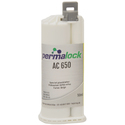
- The absolute best results are achieved with Permalock AC 650, specially developed for plastics with low surface energy/tension. This adhesive has very high tensile strength on typically difficult-to-bond materials like PVDF.
Allow the PVDF adhesive to cure according to the manufacturer’s instructions to ensure maximum strength and bonding performance.
After bonding, the assembly should be tested to ensure it meets the required mechanical properties and performance parameters, including tensile strength, temperature resistance, and chemical resistance.
Manufacturers
These manufacturers and their products cover a broad spectrum of applications and industries where PVDF is used.
Centrovinyliden - Centron International
Chemfluor - Saint-Gobain Performance Plastics
Dyflor - Dyneon (a division of 3M)
Ekafluvin - Eka Chemicals
Ertalef - Quadrant Engineering Plastic Products
Foraflon - Arkema
Hylar - Solvay
Kureha - Kureha Corporation
Kynar - Arkema
Polidene - Polyplastics Co., Ltd.
Serfene - Sefar AG
Solef - Solvay
Symalit - Symalit AG
Vidar - Evonik Industries
Contact us
Do you have questions about bonding or need advice on choosing the right adhesive for your application? Our experts are ready to help you achieve reliable and durable bonding.
We offer solutions with adhesive products that are tailored to meet your specific needs.
Contact us today for professional advice and support.
Call us at +45 66171802 to speak directly with one of our specialists, or send us an email at info@hojstrup.dk.
We ensure that you receive the best guidance and support for your bonding projects.