How to Glue Neoprene Rubber / Polychloroprene (CR-Rubber)
How to Glue Neoprene Rubber also called Polychloroprene (CR)
Neoprene offers better resistance to oxidation, ozone, weather conditions, water, oil, and fuel compared to natural rubber. Although neoprene does not have any particularly outstanding performance properties, it provides a good balance of various properties. The choice of rubber compound will determine the range of properties that can be achieved in the finished rubber. The curing method as well as the selection of fillers, plasticizers, processing aids, and antioxidants will determine where the properties fall within this range. Generally, neoprenes also offer high tensile strength, good abrasion resistance, and reduced compression set. Neoprenes perform well at low temperatures, although some types are more prone to crystallization than others.
Polychloroprene (CR) has many applications due to its excellent properties. It is used for gaskets, seals, de-icers, timing belts, window seals, fuel hoses, cable insulation, pipeline cleaners, conveyor belts, power transmission belts, escalator handrails, as well as wire and cable laying.
The surface tension of Polychloroprene (CR) typically ranges from 34 to 40 dyn/cm.
Polychloroprene (CR) is marketed under various trade names such as BAYPREN, BUTACLOR, and NEOPRENE, representing specific brands of this synthetic rubber.
Adhesive Bonding
Clean and degrease the surface thoroughly to ensure good adhesion. Use a non-aggressive cleaning fluid. Consider using a primer or performing a corona or plasma treatment to improve adhesive bonding.
Choose the correct CR adhesive:
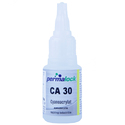
- Cyanoacrylate adhesive, also known as super glue, is known for its fast curing time and strong bonding properties on a range of materials, including rubber and elastomers such as Polychloroprene. CA adhesive has strong adhesion properties that allow it to bond effectively to various materials. Polychloroprene is a flexible rubber with good mechanical properties, and CA adhesive can adapt to this flexibility without losing its strength.
- Contact adhesive may be suitable for certain CR applications, but it is important to select the appropriate type of contact adhesive suitable for rubber and elastomers such as CR. Contact adhesive has a significantly longer curing time than cyanoacrylate and may be less suitable for a production line – especially if it is automated.
Always remember to follow the manufacturer’s instructions carefully for proper bonding of Polychloroprene (CR).
It is always recommended to perform adhesive tests to ensure that the chosen adhesive meets the strength and durability requirements for the specific application.
Manufacturers
Polychloroprene (CR) is produced and marketed by leading companies in the chemical industry. Some of the most recognized trade names include BAYPREN from Bayer, BUTACLOR from Enichem Elastomers, and NEOPRENE from DuPont. These manufacturers are known for their technical expertise and innovative approaches to delivering Polychloroprene in various formulations that meet industrial requirements for durability, resistance, and performance.
Contact us
Do you have questions about bonding or need advice on choosing the right adhesive for your application? Our experts are ready to help you achieve reliable and durable bonding.
We offer solutions with adhesive products that are tailored to meet your specific needs.
Contact us today for professional advice and support.
Call us at +45 66171802 to speak directly with one of our specialists, or send us an email at info@hojstrup.dk.
We ensure that you receive the best guidance and support for your bonding projects.